
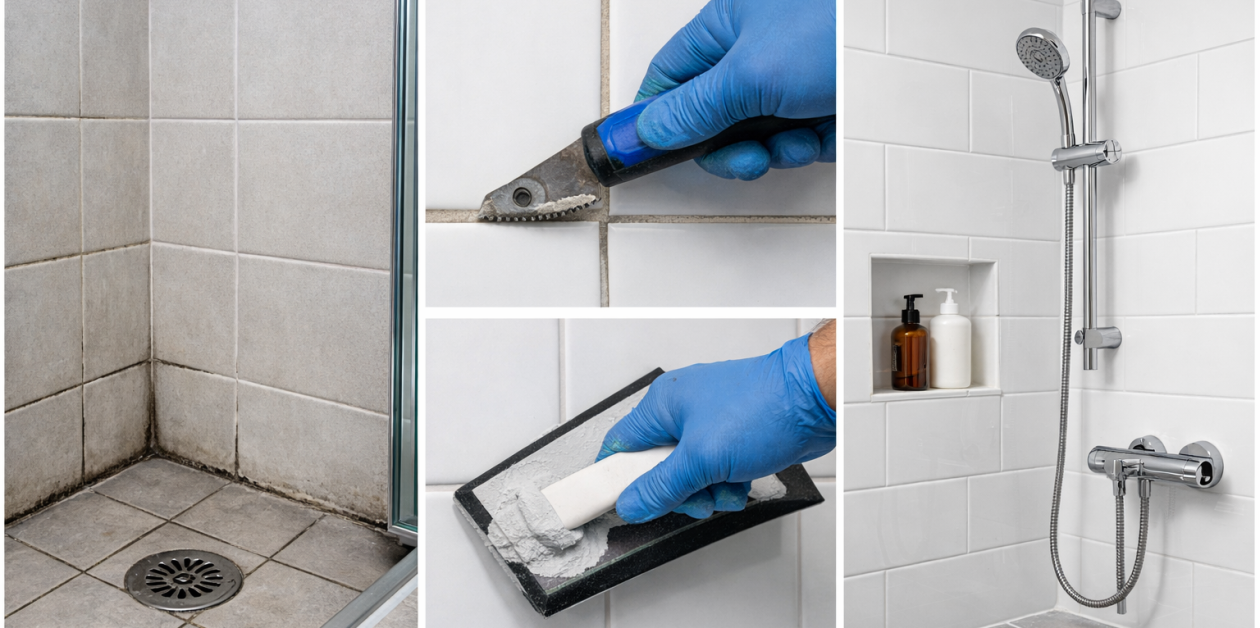
A shower that looks worn, stained, or damaged can make the entire bathroom feel outdated. When homeowners notice cracked grout, mouldy joints, or signs of moisture problems, one of the first questions they ask is whether they need a complete shower renovation or if shower regrouting will solve the problem.
The answer depends on the condition of your shower. While a full renovation may be necessary in some situations, many showers can be restored through professional regrouting without the cost and disruption of a major renovation project.
In this guide, we’ll compare shower regrouting and shower renovation to help you determine which option is right for your home.
Shower regrouting involves removing old, damaged, or deteriorated grout and replacing it with fresh grout.
Regrouting focuses on restoring the grout while keeping the existing tiles in place.
A shower renovation involves removing and replacing some or all components of the shower area.
A renovation is generally a larger project designed to completely transform the shower.
For many homeowners, budget plays a significant role in the decision-making process.
Benefits from a cost perspective include:
Regrouting is often one of the most cost-effective ways to improve the appearance and performance of a shower.
A renovation typically involves:
As a result, a complete renovation usually requires a significantly larger budget.
Regrouting is generally completed faster because:
This makes regrouting a practical option for homeowners seeking quick results.
A renovation often takes longer due to:
Larger renovation projects can take considerably longer to complete.
Professional shower regrouting may be the ideal solution if:
In many cases, regrouting can restore the shower’s appearance and functionality without replacing the existing tiles.
A full renovation may be necessary when:
In these situations, a renovation may provide a more suitable long-term solution.
Many property owners choose regrouting because it offers several practical advantages.
These benefits make regrouting a popular choice for showers that are structurally sound but suffering from grout deterioration.
Before making a decision, consider the following questions.
If the tiles are:
Regrouting may be sufficient.
If the primary issues include:
Professional regrouting is often the logical first step.
If there is evidence of:
A renovation may be required.
If your shower tiles are still in good condition, professional regrouting can often deliver impressive results without the expense of a full renovation.
For many homeowners, shower regrouting offers a practical and cost-effective alternative to a complete shower renovation.
If your tiles remain in good condition and the main issue is damaged grout, regrouting can often restore the shower’s appearance while saving considerable time and money.
However, if the shower has extensive structural issues, failed waterproofing, or damaged tiles, a full renovation may be the better long-term investment.
A professional assessment can help determine which option provides the best value for your specific situation.
Yes. Regrouting is generally far more affordable because it retains the existing tiles and requires significantly less labour and material.
In many cases, yes. Replacing damaged grout can dramatically improve the appearance of a shower and make it look fresher and more modern.
If the tiles are damaged, loose, or there are underlying structural issues, a renovation may be necessary. If the tiles are still in good condition, regrouting may be sufficient.
The lifespan depends on usage, moisture exposure, and maintenance, but professionally completed regrouting can provide long-lasting results for many years.
0411 373 272
Available 24/7